

Ship decarbonization solutions for your vessel
Compare proven technologies to reduce fuel consumption, emissions and operating costs. Find out which technology fits best around your vessel, operating profile and decarbonization goals.
Energy saving
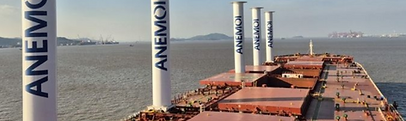

Fuel and emissions reduction of 5-30% of fuel consumption by wind assist


Upto 85% pump energy reduction with FUELSAVE® saves 3-8% fuel consumption


Marine electric zero-emission propulsion and containerized batteries

Clean energy & fuels


Valves and fuel preparation systems for Ammonia, Methanol, Ethanol & LNG


Marine approved solar PV systems for all types of vessels reduces hotel load


Hydrogen fuel cell systems for (partly) zero-emission sailings

Emission & compliance


IMO approved sensors help you prove lower CH₄ emissions for FuelEU


Methane slip catalyst, SCR-systems and DPF / DOC filters


Water treatment and filtration systems with OilRepellent™ technology

Explore each technology
Learn more about each solution, including typical benefits, applications and reference projects

Energy saving
WAPS | Rotor sails
Reduce propulsion fuel consumption with wind
Wind-assisted propulsion (rotor-sails) harnesses wind energy to reduce engine load, fuel consumption and emissions. Rotor sails can be installed on newbuilds and as a retrofit solution with minimal modifications to your vessel.
Typical benefit

5–30% potential fuel and emissions reduction with wind-assisted propulsion*
Suitable for:

Retrofit & newbuild.
Bulkers, tankers, RoRo, ferries, container ships
Technology partner

Anemoi Marine


Energy saving
Central cooling optimization
Reduce pump energy and total fuel consumption
Fuelsave® dynamically optimizes seawater and central cooling pumps according to actual cooling demand, reducing electrical load and consequently auxiliary-engine fuel consumption.
Typical benefit
Upto 85% pump energy reduction &
from 3 - 8% vessel fuel savings *
Suitable for:
Retrofit & newbuild
Vessels with seawater / central cooling systems
Technology partner
Vexve / Frese


Energy saving
Battery & shaft generator
Reduce engine hrs and optimize onboard power
Marine battery and shaft-generator solutions enable more efficient power generation, peak shaving and hybrid operation, reducing generator running hours, fuel consumption and emissions.
Typical benefit
Reduced genset operation and fuel consumption
Zero-emission possibilities
Suitable for:
Retrofit & newbuild for workboats, ferries,
offshore and commercial vessels
Technology partner
SETH CSSC

Typical benefit
Enables lower-carbon and alternative-fuel operation
Suitable for:
Newbuild & retrofit
Tankers, bulkers, container ships, offshore, ferries
Technology partner
FuelTech A/S

Dual fuel | Clean fuels
Prepare for a lower-carbon fuel future
Fuel preparation, valve and auxiliary systems support the transition to alternative marine fuels including ammonia, methanol, ethanol and LNG, with reliable marine-proven solutions.

Clean energy & fuels
Typical benefit
Reduced hotel load, fuel consumption
and genset hours
Suitable for:
Retrofit & newbuild
Vessels with suitable deck or superstructure area
Technology partner
Marine-PV

Solar PV | Marine solar power
Reduce auxiliary-engine load with solar power
Marine-approved solar PV systems generate onboard electricity and reduce the load on auxiliary generators, lowering fuel consumption, emissions and generator running hours.

Clean energy & fuels
Typical benefit
Zero-emission operation when using
green hydrogen
H₂ power & propulsion
Zero-emission power from hydrogen
Suitable for:
Newbuild & selected retrofit projects
Inland, shortsea and specialized vessels
Technology partner
eCap Marine

Hydrogen fuel-cell systems provide zero-emission electrical power and can support propulsion or onboard energy demand as part of a hybrid or hydrogen-powered vessel concept.

Clean energy & fuels

Emission & compliance
CH₄ | Methane slip sensor
Measure and document Methane emissions
Marine methane-slip measurement provides accurate CH₄ data to monitor emissions from LNG and dual-fuel engines and support FuelEU Maritime reporting and compliance.
Typical benefit
Accurate methane measurement and compliance documentation
Suitable for:
Retrofit & newbuild
LNG four-stroke main and auxiliary engines
Technology partner
Green Instruments


Emission & compliance
CH₄ & NOx | Emission cleaning
Reduce methane slip and exhaust emissions
Marine exhaust after-treatment combines technologies such as methane-slip catalysts, SCR and particulate filtration to reduce CH₄, NOx and other harmful exhaust emissions.
Typical benefit
Reduced methane slip, NOx and
particulate emissions
Suitable for:
Retrofit & newbuild.
Gas, dual-fuel and diesel engine applications
Technology partner
STILWORX


Emission & compliance
H₂O | Water treatment
Treat contaminated water without chemicals
OilRepellent™ filtration technology separates oil and contaminants from water using advanced filtration, providing a compact treatment solution for demanding marine applications.
Typical benefit
Efficient water treatment and filtration without chemical use
Suitable for:
Newbuild & retrofit
Commercial and offshore vessels
Technology partner
Alfa Water

Not sure which solution fits your vessel?
We help you compare technologies based on your vessel, operating profile, fuel consumption and decarbonization goals.
* Performance and savings depend on vessel type, operating profile, route, system configuration and other project-specific conditions. Figures shown are indicative and based on technology-provider information and/or project results.
Decarbonization regulations → practical solutions
Different regulations require different approaches. FuelEU Maritime, EU ETS and CII/EEXI increasingly connect vessel efficiency, fuel choice and emissions performance with operational and financial consequences.
FuelEU Maritime
Reduce GHG intensity through fuel efficiency, electrification and alternative fuels.
EU ETS
Lower fuel consumption and reportable CO₂ emissions.
CII / EEXI
Improve vessel efficiency with wind assist, electrification and energy-saving technologies.
2030–2050 transition
Prepare vessels for alternative fuels, hydrogen and deeper emission reductions.